
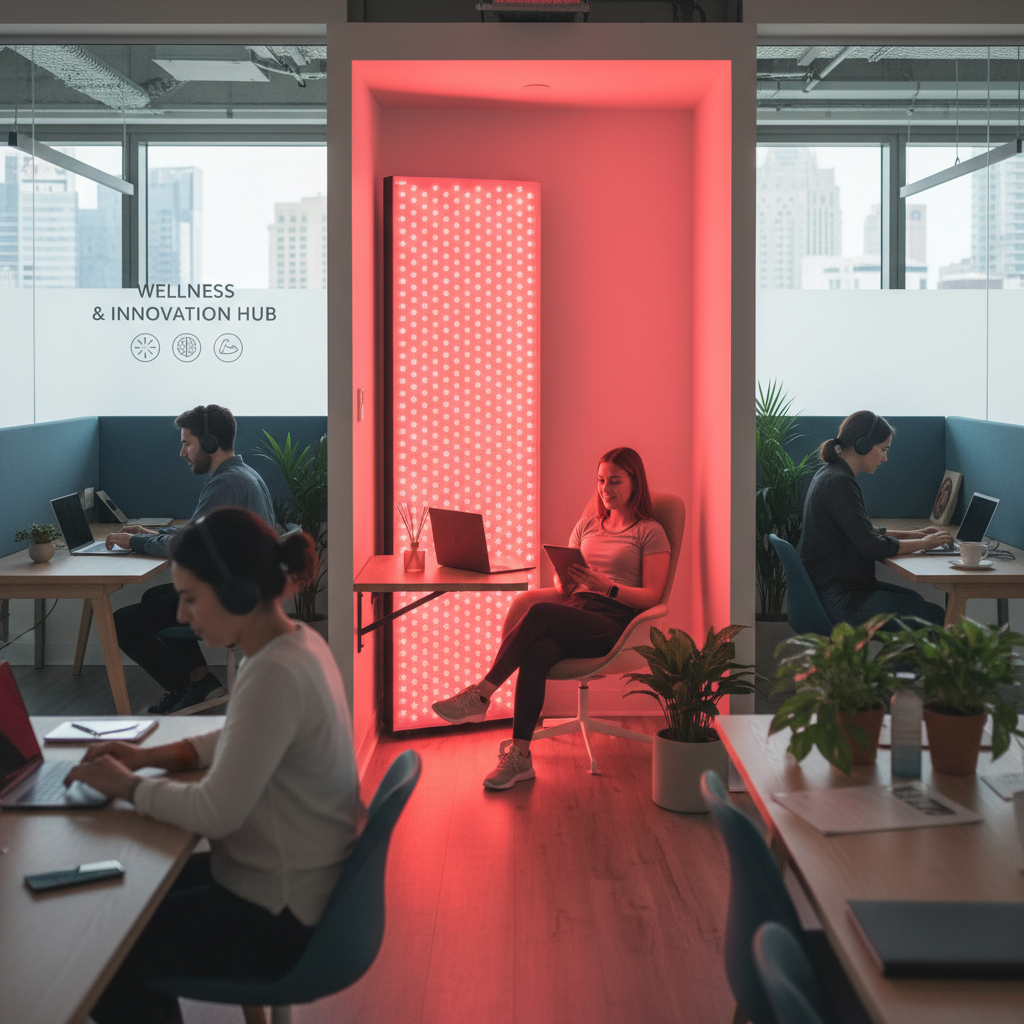
For coworking operators, community managers, and HR or workplace wellness leads who want to boost member retention and daily performance but don’t know where to start — you’re juggling noise levels, screening amenities, and keeping productivity high while also supporting health. Red light therapy in coworking spaces offers a low-friction, science-backed option to support sleep quality, skin health, muscle recovery, and mental clarity — and our team can design pilot programs, install equipment, and measure outcomes so you don’t have to guess what works.
Top 9 ways red light therapy in coworking spaces boosts wellness and productivity
So here’s the thing about adding a new wellness amenity: it has to be noticeable, easy to use, and actually move the needle on productivity. These nine benefits give you both the why and the how – plus practical tips for rollout.
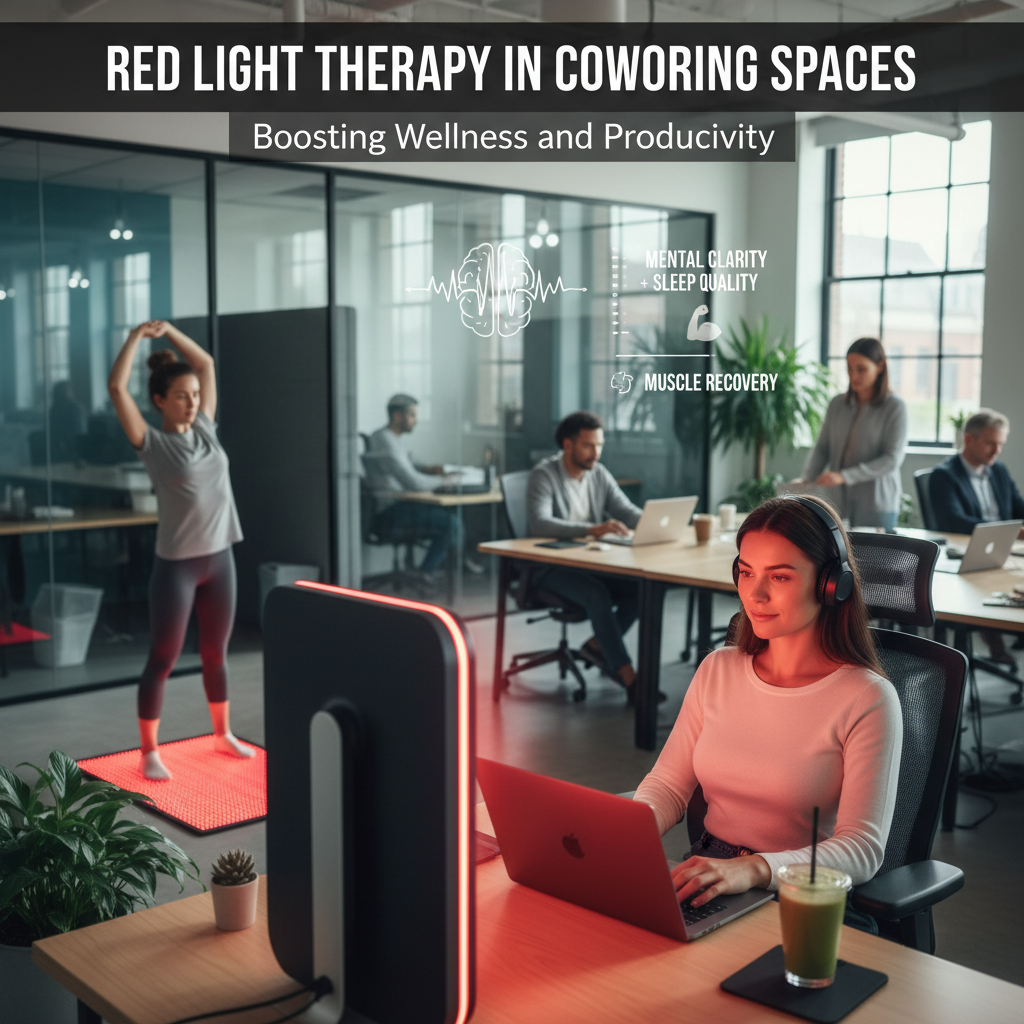
1. Faster post-workout muscle recovery – get people back to work sooner
Red and near-infrared light reduce inflammation and speed muscle recovery (when used correctly). For members who bike, run, or take fitness classes at lunch, a 10-15 minute session after exercise can cut soreness and improve next-day performance.
How to implement: place a therapy panel in the wellness room next to stretching mats. Offer short recovery slots on your booking app (10 or 15 minutes) and add signage with simple safety notes (don’t stare directly at the LEDs, follow device instructions).
2. Better sleep quality – less afternoon fog, sharper mornings
Exposure to red and near-infrared light in the late afternoon or early evening helps stabilize circadian signals without the blue-light penalty. Translation: members report less evening screen-driven insomnia and better morning focus.
Quick tip: set up a low-brightness “wind-down” zone with ambient red light panels and comfortable seating. Encourage 10- to 20-minute sessions, especially for night-shift freelancers or teams working late.
3. Improved skin health – a subtle but valued perk
Red light stimulates collagen production and can reduce fine lines and inflammation (skin health is an attractive benefit for many members). It’s like offering a complimentary skincare boost, without the appointment hassle.
Operational note: make the therapy space opt-in only, post clear usage guidance, and partner with a local aesthetician for workshops (adds credibility and member education).
4. Faster mental recovery and clearer focus – reduce cognitive fatigue
I’ve noticed teams using 10-minute red light breaks before intense strategy sessions and coming out with clearer ideas. The light supports mitochondrial energy production, which helps with mental clarity and sustained attention.
How to measure: run short surveys asking members to rate focus before and after sessions, or compare meeting outcomes from booked teams who used the light vs those who didn’t (small experiments tell you a lot).
5. Reduced stress and quicker emotional recovery – calm, without meditation apps
Look, not everyone will meditate. But a quiet 12-minute red light session in a pleasant room can lower cortisol and offer a physiological reset. Members return to desks feeling calmer and more productive.
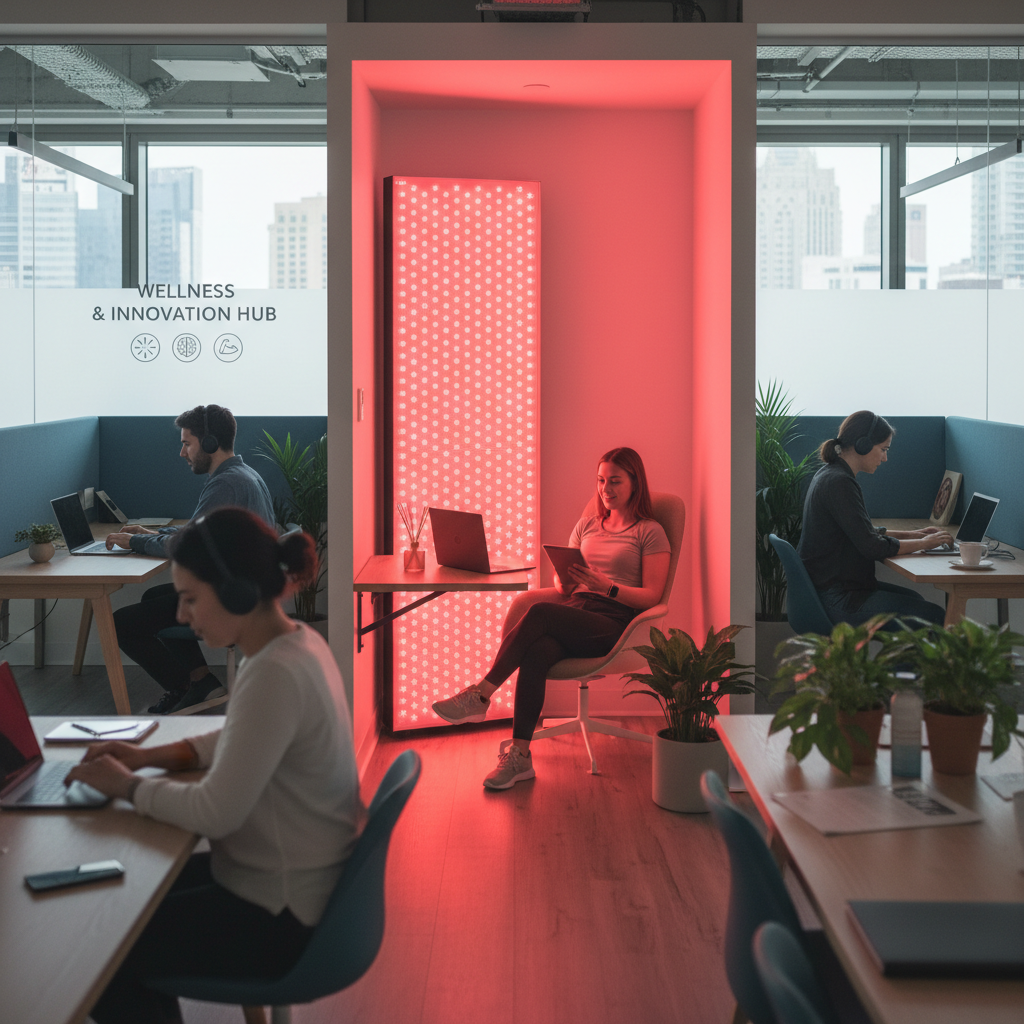
Design advice: combine soft seating, plants, and a red light panel for an inviting oasis. Keep sessions private, and add a “no-calls” policy so members can truly unplug.
6. Low-touch health recovery for illness or long workdays
Members who push through long work weeks often show up with chronic fatigue. Short, regular red light sessions help support cellular recovery (again, done alongside proper rest and medical advice).
Rollout idea: offer an introductory free session for new members during onboarding, so they try it and know how it fits their routine. Track usage and feedback to spot trends.
7. Amenity differentiation – stand out in a crowded market
Adding red light therapy is a practical, modern perk that signals you care about member wellbeing. It’s not just a wellness fad – it’s a tangible service people can experience quickly.
Marketing tip: feature real member stories and session photos (with consent). Offer package add-ons like “Recovery + Meeting Room” bundles to monetize the feature.
8. Easy integration with scheduling and member analytics
Don’t create friction. Integrate therapy sessions into your existing booking system so members can reserve 10-minute blocks like any other room. That also lets you collect meaningful data on usage patterns and ROI.
What to track: session frequency, average duration, membership tier adoption, and correlated outcomes like fewer day-pass cancellations or higher retention in trial months.
9. Scalability and cost-effectiveness for operators
Panels are compact, require minimal maintenance, and can be scaled by demand (start with one module, add more as usage grows). The cost per active user often undercuts traditional wellness perks like expensive on-site gyms.
Finance note: run a 90-day pilot with baseline member satisfaction and productivity KPIs. If you see higher retention or increased membership upgrades, expand to additional locations.
How to set up red light therapy safely and effectively in a coworking space
Safety and clarity sell. Members need to trust both the technology and how to use it.
- Choose reputable panels with both red (630-680 nm) and near-infrared (800-850 nm) options for broad benefits.
- Provide clear instructions and session templates: 8-15 minutes for most uses, 3-5 times per week for ongoing benefits (follow manufacturer guidance).
- Place panels in a dedicated, ventilated room with adjustable seating and privacy screens.
- Train staff to explain benefits, contraindications (pregnancy, certain medical devices), and to escalate medical questions to professionals.
- Use eye protection guidance and caution printing for clarity – don’t overcomplicate it.
What to measure – KPIs that prove impact
Numbers get you buy-in from leadership. Track things that show a business case.
- Member adoption rate: percentage of members who try at least one session in 60 days.
- Session repeat rate: how many members use the therapy more than twice per month.
- Retention delta: compare churn among members who use the therapy vs those who don’t.
- Self-reported outcomes: sleep quality, energy, focus scores from short post-session surveys.
- Operational metrics: booked session utilization, average session length, and any maintenance incidents.
Practical tips for promoting adoption
Don’t overthink marketing. Make it visible, simple, and social.
- Run a “First Light” promotion: free 10-minute sessions for new members for the first 30 days.
- Host expert demos with a local clinician or trainer (adds credibility and answers safety questions).
- Bundle with other offerings: recovery classes, ergonomics consultations, or meeting room perks.
- Share short testimonials and before/after stories (video is great, 30 seconds or less).
Common Questions
What is red light therapy and how does it work?
Red light therapy uses specific wavelengths of red and near-infrared light to stimulate cellular energy production in mitochondria, which can reduce inflammation, improve tissue repair, and support collagen production. Short sessions are enough for noticeable effects, and consistent use amplifies benefits.
Is red light therapy safe for use in shared spaces?
Yes, when you follow manufacturer guidelines and provide clear user instructions. Avoid direct eye exposure for extended periods, post contraindications, and make sessions opt-in. Train staff and require members with medical implants or conditions to consult their doctor first.
How long should sessions be in a coworking environment?
Most effective sessions are 8 to 15 minutes for general wellness and focus, 10 to 20 minutes for recovery or sleep-prep. Start shorter, allow members to test, and encourage regular but not excessive use (more is not always better).
How quickly will members notice benefits?
Some people report immediate mental clarity after a single session. Physical or skin improvements usually require 4 to 12 sessions over several weeks. Track self-reported measures to capture both short-term and cumulative effects.
Conclusion
Red light therapy isn’t a gimmick. It’s a compact, scalable wellness amenity that supports sleep quality, skin health, muscle recovery, and mental clarity – all of which translate to real productivity gains for coworkers and teams. The best approach is to run a small pilot, integrate sessions into your booking flow, and measure impact with clear KPIs.
If this feels overwhelming, our team can set up the pilot room, manage installation, train staff, and run the analytics so you can focus on community and growth. Simple steps, measurable outcomes, less guesswork.