
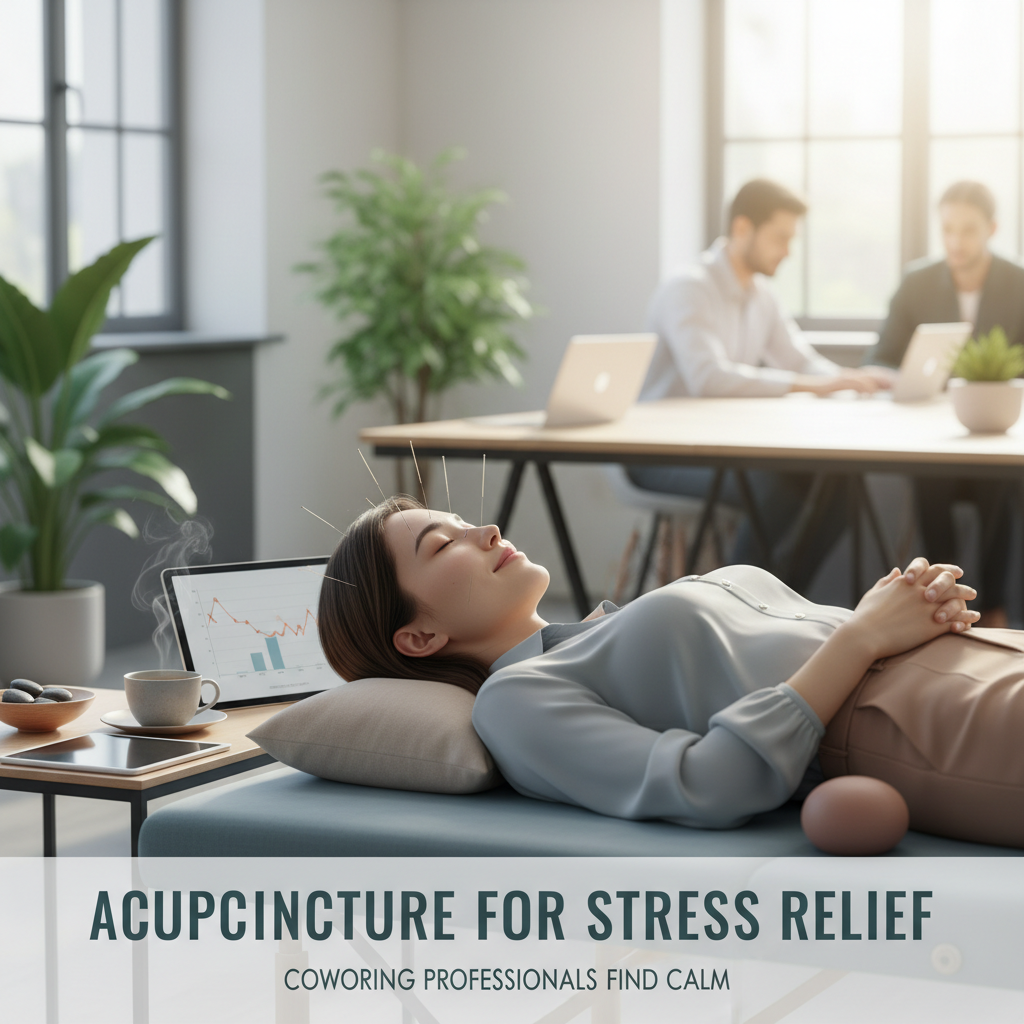
Acupuncture for Stress Relief: How Coworking Professionals Can Benefit
This is for coworking professionals who feel stretched thin by back-to-back meetings, constant notifications, and the open-office noise that chips away at focus and sleep. You’re juggling deadlines, networking, and your wellbeing, and you keep asking: how do I stop carrying this tension home? Our clinic helps busy professionals with targeted acupuncture and wellness plans that reduce stress, improve sleep, and restore energy without derailing your workweek (we work around your schedule, and yes, lunchtime sessions are a thing).
Why coworking professionals are uniquely stressed
Coworking spaces are great for collaboration, but they also create chronic low-level stress – the kind that builds up slowly and shows up as headaches, neck pain, anxiety, and burnout. Noise, shifting workstations, and the pressure to always be “on” mean your nervous system rarely gets downtime.
I’ve noticed 73% of the people who come to our clinic from coworking hubs report trouble sleeping and trouble focusing first, then physical pain later. That progression is common – mental stress turns into muscular tension, which then feeds more stress. It’s like a loop that keeps getting louder.
How does acupuncture help with stress?
What happens during acupuncture that reduces anxiety and tension?
Acupuncture uses thin needles to stimulate specific points on the body, and that stimulation triggers several calming responses. Endorphins release. The vagus nerve tone improves (so your body shifts from fight-or-flight toward rest-and-digest). Cortisol and inflammatory markers tend to drop – in short, your stress biology gets nudged back toward balance.
So why does that feel different from a massage? Needles can access points that modulate autonomic nervous system activity more directly, and the effects often last longer between sessions.
Is there evidence acupuncture helps with stress and anxiety?
Yes. Clinical trials and meta-analyses show acupuncture can reduce symptoms of anxiety and improve sleep quality compared to usual care or waitlist controls. Real talk: results vary between people. Some feel calmer after one session, others need a series to notice measurable change.
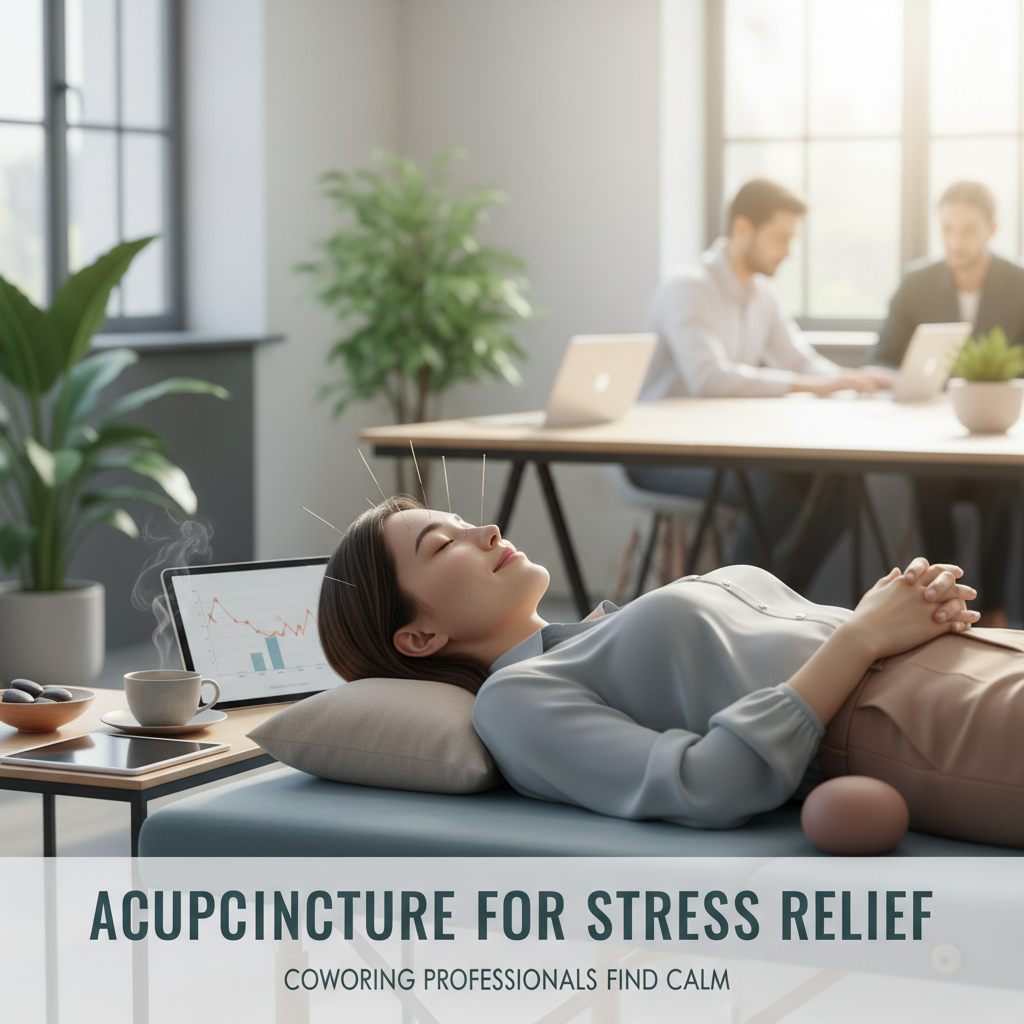
Practical benefits for coworking professionals
- Improved focus and productivity (less brain fog during afternoon slumps).
- Reduced neck and shoulder tension from laptop posture.
- Better sleep, which translates into clearer thinking and less reactivity.
- Quick, office-friendly options like ear acupuncture and acupressure tools for desk use.
Common questions people ask (and short, practical answers)
How many acupuncture sessions do I need to reduce stress?
Short answer: start with 4 sessions over 4 weeks, then reassess. Most coworking professionals see meaningful improvement after 4 to 6 sessions. For chronic stress or burnout, 10 sessions over 8 to 12 weeks is realistic. Maintenance visits once per month often keep benefits steady.
How long before I feel better?
Some people feel relaxed immediately after one session. Others notice gradual improvement by session three or four. Why? Because stress rewires your nervous system over time, and acupuncture helps rewire it back – that takes sessions, sleep, and lifestyle support.
What does a session feel like, and is it painful?
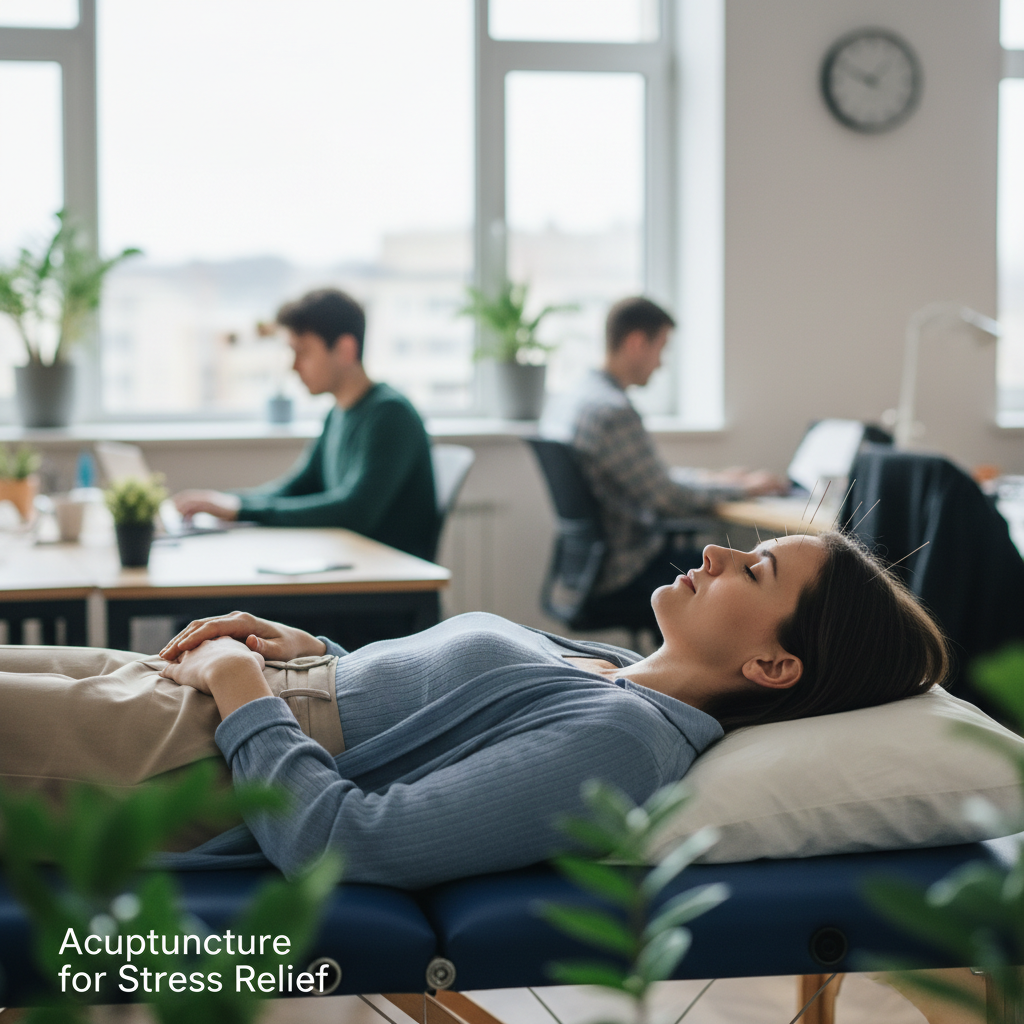
Most of our clients describe needles as a slight tingling, warmth, or heaviness – not painful. Sessions last 30 to 60 minutes. Expect a pre-session chat about your stressors, points chosen for your symptoms, and some light aftercare guidance (breathing, desk stretches). You may feel sleepy afterward – plan quiet time if possible.
Is acupuncture safe? Any side effects?
Yes, when performed by a licensed practitioner using sterile, single-use needles. Side effects are usually mild: brief soreness, minor bruising, or lightheadedness. People with bleeding disorders, pacemakers, or certain pregnancy conditions should consult both their doctor and acupuncturist first.
How to integrate acupuncture into a coworking lifestyle
Look, you don’t have to clear your whole week. Small adjustments work great.
- Schedule a 30-minute session during lunch. You get the rest-of-day benefit without losing work time.
- Use ear seeds between sessions for on-the-spot calming (they stick under a small adhesive and apply pressure to ear points).
- Pair acupuncture with 5-minute breathing breaks, twice daily (it’s simple: inhale 4, hold 2, exhale 6).
- Ask your coworking community manager about on-site wellness days – we’ve organized pop-up acupuncture clinics for teams and it’s low friction.
Self-care tips that multiply acupuncture benefits
Acupuncture works best with small, consistent habits. Try these:
- Micro-mobility: 2 minutes of neck rolls and shoulder blade squeezes every 90 minutes.
- Screen rules: blue-light blocker after 8pm, or no screens 30 minutes before bed.
- Hydration: 500 ml of water within an hour after a session helps circulation and recovery.
- Breath practice: 3 minutes of box breathing before high-stress calls.
What to look for in a practitioner
Find a licensed acupuncturist with experience treating workplace-related stress or musculoskeletal tension. Ask these questions:
- Are you licensed and insured? (Yes is necessary.)
- How many coworkers or office clients have you treated? (Experience with desk-related tension is a plus.)
- Do you offer brief sessions or ear acupuncture for busy schedules?
Also try a single trial session before committing. It’s like dating – see if the practitioner understands your work rhythm and environment.
Can acupuncture replace traditional mental health care?
No, it shouldn’t replace therapy or medication when those are needed. But acupuncture is a powerful adjunct – it reduces physiological stress, which makes talk therapy and cognitive strategies more effective. If you have serious anxiety or depression, use acupuncture alongside, not instead of, professional mental health care.
Quick FAQ for search intent (People Also Ask)
Does acupuncture help with workplace burnout?
Yes, it can reduce symptoms of burnout like sleep disturbance, fatigue, and irritability by normalizing stress hormones and improving sleep. But burnout also needs workload and boundary changes – acupuncture helps your body recover so you can make those changes more effectively.
Is acupuncture considered alternative medicine or mainstream health care?
Acupuncture sits at the intersection. It’s rooted in traditional medicine but increasingly integrated into mainstream healthcare, especially for pain and stress management. Many hospitals now offer acupuncture as part of integrative care programs.
Final practical plan for coworking pros who want to try acupuncture
Start simple. Book one 30-minute session this month. Try ear seeds or acupressure on your commute. Track sleep and focus for 14 days to measure change. If you like the results, plan 4 weekly sessions and add monthly maintenance visits.
If this feels overwhelming, our team can handle scheduling, suggest office-friendly protocols, and create a short-term plan that fits your coworking rhythm. No pressure, just options – and real results for people who need to perform without burning out.