
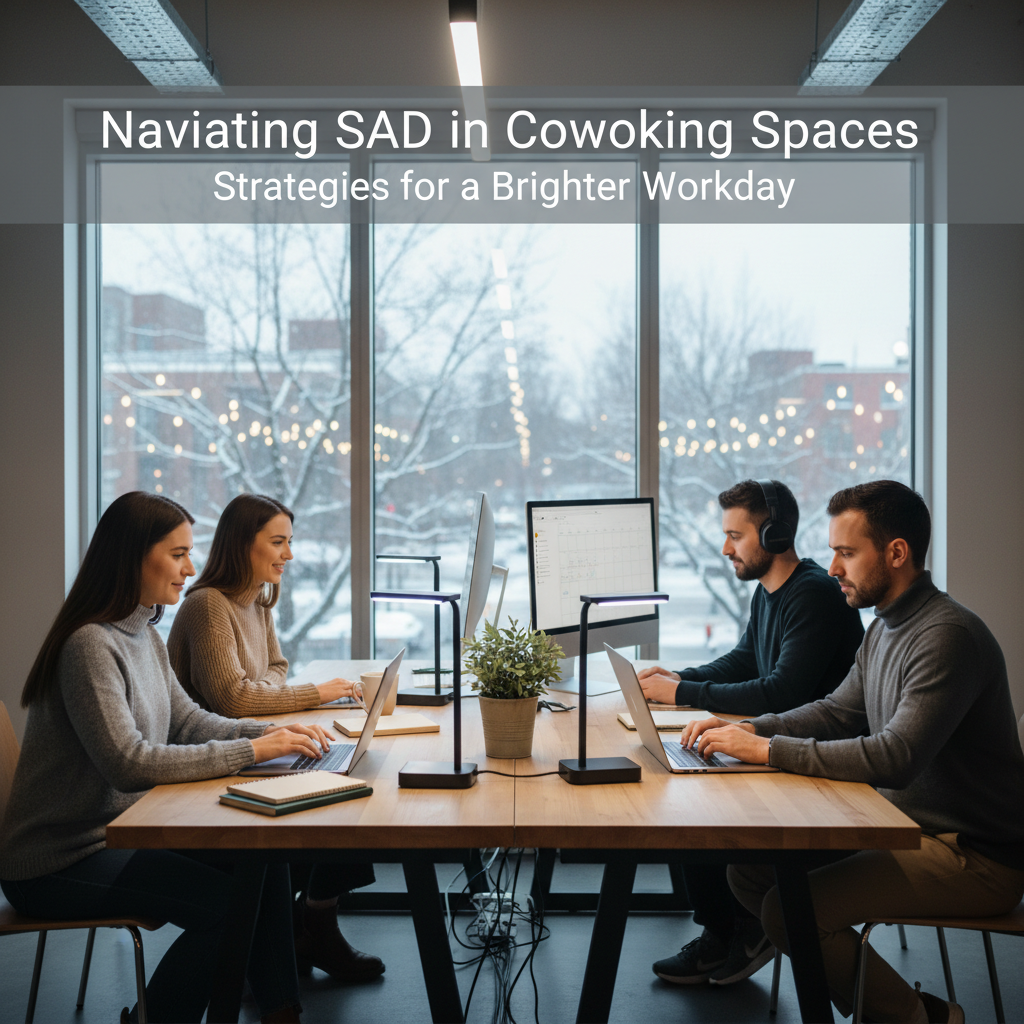
Navigating Seasonal Affective Disorder in Coworking Spaces: Strategies for a Brighter Workday
If you run a coworking space or you’re a member who dreads the winter blues, you know how quickly low light and cramped routines can wreck mood and productivity. You’re not alone, and there are concrete ways to push back—practical workspace design tweaks, light therapy options, scheduling hacks, and community programs that actually help people feel better and get more done. Our approach combines evidence-backed tactics and easy operational changes so members spend less time in a slump and more time producing real work.
What is SAD (seasonal affective disorder) and how does it show up in work settings?
Seasonal affective disorder, or SAD, is a subtype of depression linked to seasonal changes in daylight. People often experience lethargy, low mood, trouble concentrating, and disrupted sleep during darker months. In coworking settings that means fewer hot-desk signups, lower member retention, and more complaint emails about the space feeling “bleak” or “draining”.
I’ve noticed members describe the mid-afternoon slump as if the room literally steals their focus. They get distracted, cancel meetings, or work from home where they can curl up on a couch (which doesn’t help productivity). That’s where targeted workspace design and programming come in.
Common symptoms to watch for
Members might report one or more of these: persistent low mood, low energy, craving carbs, oversleeping, trouble concentrating, irritability. If you hear these repeatedly, treat it like user research—patterns matter.
Why coworking spaces can worsen or help SAD
Coworking spaces have a unique mix of strengths and vulnerabilities. On one hand, shared communities reduce isolation (which helps mental health). On the other hand, many spaces skimp on daylight, rely on cool fluorescent lighting, or pack desks away from windows to maximize capacity. That configuration makes the “winter slide” worse.
But you can flip the script. Spaces that prioritize daylight, adaptable lighting, and micro-rituals (short walks, community meetups) see better engagement. Real talk: it’s like choosing between a Ferrari and a bicycle. You can optimize the Ferrari to run in the snow, or you can ride a bike designed for it. Both work, but tweaks matter.
Practical light strategies members can use today
Light is the big lever. Use it first, then layer other tactics.
Light therapy—how to use it in a coworking environment
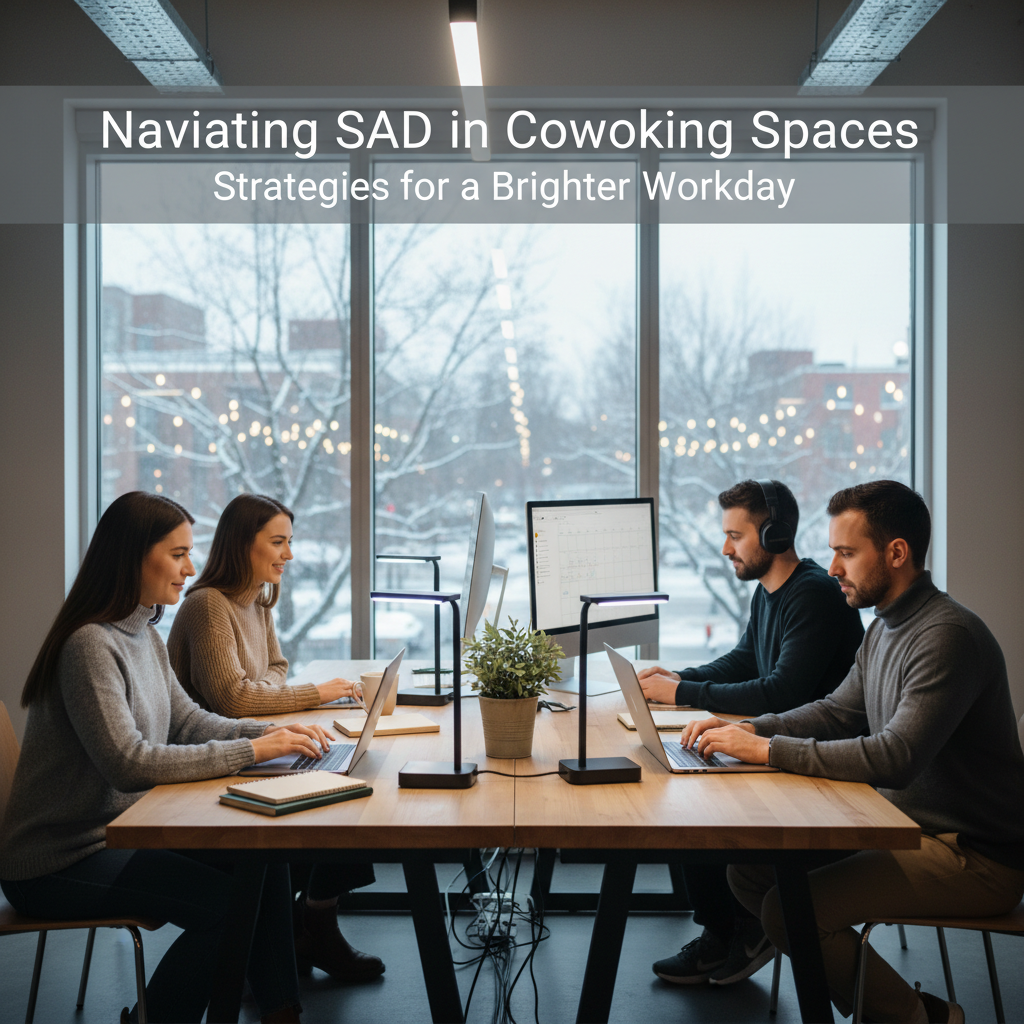
What works: a 10,000 lux light box used for about 30 minutes each morning is the standard clinical recommendation for many people with SAD. If you can’t commit to 30 minutes, a 2,500 lux lamp for 60 minutes will still help. Place devices on shared “wellness desks” or in private focus rooms where people can sit and read email while getting light exposure.
Practical placement: set lamps at eye level 12 to 24 inches away, slightly off to the side so people can work without glare. Use lamps with color temperature around 5,000 kelvin to mimic daylight (not the yellow cozy bulbs). And always add signage: quick safety guidance, who should consult a clinician, and how to book the lamp station.
Why morning? Exposure within the first hour after waking re-anchors circadian rhythm, so recommend sessions between 7:00 and 9:00 a.m. If your crowd starts later, offer flexible slots but encourage morning use.
Maximize natural light and layout
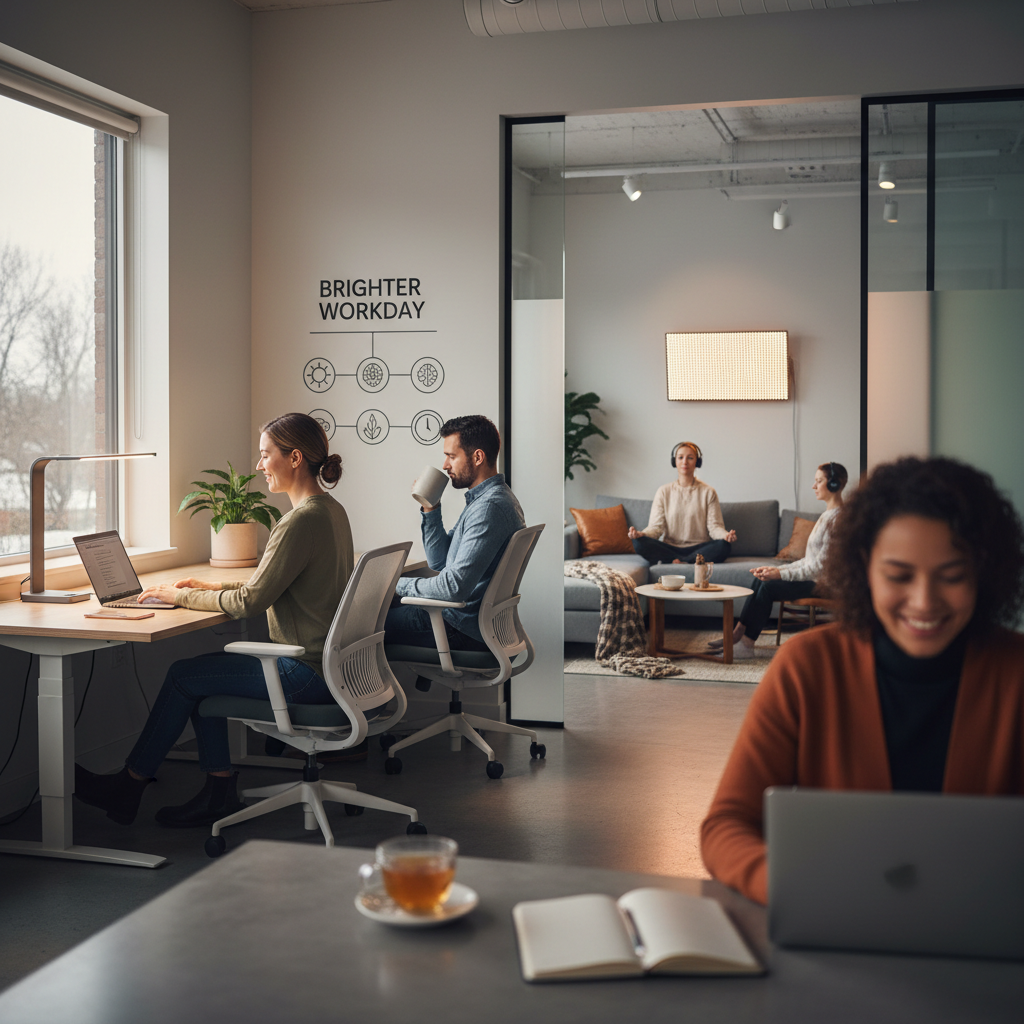
Move common work zones toward windows. If you must place desks away from windows, install task lamps with adjustable color temperature. Use translucent partitions instead of solid walls to let daylight travel deeper into the floor plate. I’ve seen small changes—like swapping curtains for sheer shades—raise the perceived brightness dramatically.
Daily routines and behavioral tactics to boost well-being and productivity
Light helps, but routines keep gains stable.
- Encourage two 10-minute outdoor breaks per day (morning and after lunch). Even a 10-minute walk in daylight raises alertness.
- Set “sunrise” community rituals: a 9:00 a.m. stretch or coffee-mixer to build social ties (social connection fights isolation).
- Promote consistent wake times with short workshops—consistency beats perfection.
- Offer standing desks and movement prompts: every 45 minutes stand or move for 3 minutes.
Design and operational strategies for coworking operators
Operators, this section’s for you. Small investments can move the needle on member experience and retention.
Low-cost lighting upgrades
Replace old fluorescents with tunable LED panels that can shift to 5,000K in the morning and warmer tones later. Cost varies, but you can retrofit a 2,000 square foot area for under $6,000 depending on fixtures and labor. Consider a pilot: upgrade one zone, measure bookings and mood surveys, then expand.
Flexible spaces and booking policies
Create “light rooms” with reserved slots for light therapy or quiet morning work. Offer discounted half-day passes for members who need daytime flexibility. If private rooms sit empty in the morning, promote them to remote workers seeking a bright space. Use simple booking rules: 30-minute bookings, limit two consecutive sessions, keep logs for maintenance.
Community programming and partnerships
Host monthly mental health check-ins, invite local therapists for walk-and-talk sessions, or partner with a light-therapy vendor for demos. Free workshops increase foot traffic; paid masterclasses create another revenue stream. From what I’ve seen, timed social rituals reduce churn by 8 to 12 percent in climates with long winters.
Measure impact and iterate
Data makes the difference between guesswork and progress.
Track these simple KPIs: morning desk occupancy, light-room bookings, member satisfaction scores (one-question daily check), and churn rate by season. Run a three-month pilot, then compare to the prior period. If users report improved focus and you see better morning occupancy, scale the program.
Quick checklist to implement this month
- Install 2 light-therapy stations and add clear booking instructions.
- Swap 25 percent of overhead bulbs to tunable 5,000K LEDs in common areas.
- Create a “morning ritual” calendar event at 9:00 a.m. for 15 days.
- Designate two short walking routes nearby and map them for members.
- Run a one-hour workshop on SAD and light therapy with a clinician (record it).
If all this feels overwhelming, our team can handle the rollout for you—space audits, pilot design, and member education tailored to your layout and community. No pressure, just useful help.
Frequently Asked Questions
Can a coworking space legally provide light therapy devices?
Yes, but treat devices like shared equipment: post safety guidelines, require users to confirm they understand contraindications (for example, people on certain medications or with eye conditions should consult a clinician), and provide manufacturer instructions. Keep maintenance logs and clean devices between users.
How soon will members notice improvements after starting light therapy?
Some people notice mood and energy boosts within 3 to 7 days; for others it takes 2 to 4 weeks of consistent daily use. Consistency matters more than intensity—regular morning sessions yield the best results.
Are plants and color schemes actually helpful against SAD?
They help indirectly. Plants and warm accents improve perceived well-being and comfort, which reduces stress. They won’t replace light therapy, but they complement it and make the space feel less clinical and more inviting.
What’s the safest way to encourage outdoor breaks in winter?
Make them short, timed, and comfortable. Offer hot beverages, fast-zip routes, and clear signage about appropriate clothing. Encourage group walks to build social support and make it feel less like a chore.
How do I measure success without invasive surveys?
Use quick pulse metrics: day-of-week desk occupancy, number of morning check-ins, and a one-question mood slider in your app. Compare these numbers month to month. Combine quantitative trends with a few qualitative member interviews for context.