
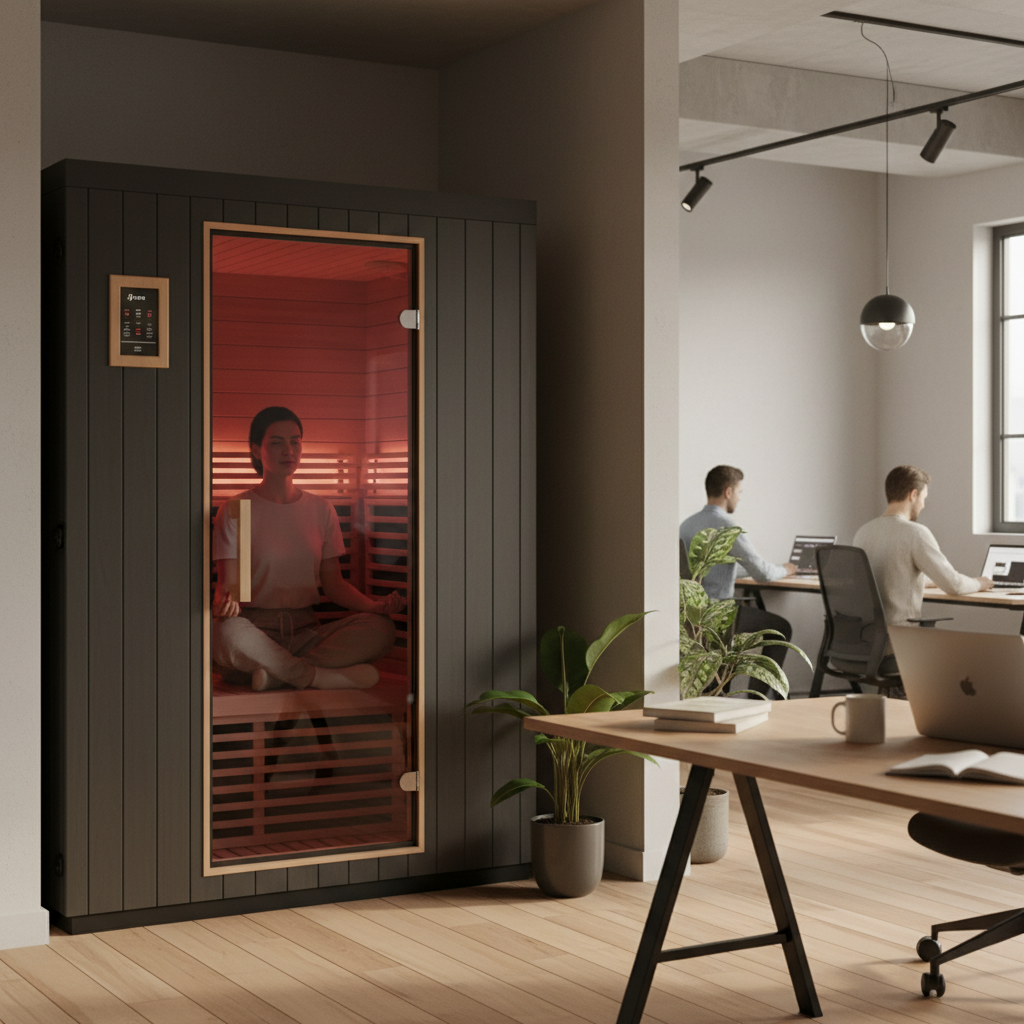
If you manage a coworking space, or you run a flexible workplace program, you’re juggling member retention, wellness offerings, and the constant pressure to stand out — and you probably worry staff and members are burnt out, distracted, or just not sticking around. Infrared sauna therapy can be a practical, high-impact way to deliver detoxification, deep relaxation, and measurable productivity gains — our team helps operators assess space, install safe units, and integrate sessions into memberships so wellness becomes a real differentiator, not just a buzzword.
Top 9 benefits of infrared sauna therapy in coworking spaces
1. Detoxification that feels real (and sells well)
Infrared saunas heat the body directly with infrared wavelengths, producing sweat at lower ambient temperatures than traditional saunas. The result: deep sweating that people describe as a detox that actually feels cleansing. Members notice it. They talk about it. Word of mouth spreads.
Practical tip – offer a 25-minute “post-workday detox” slot. People love a timed, repeatable ritual. It converts casual members into weekly users.
2. Faster relaxation and lower stress
Stress is the enemy of focus. Heat therapy triggers parasympathetic response – heart rate slows, muscles relax, breathing evens out. Sessions as short as 15 to 30 minutes can reduce the day’s chronic tension and help members come back to work calmer and more focused.
From what I’ve seen, scheduling two sauna blocks around lunch and late afternoon reduces afternoon churn in open desks. Simple scheduling tweaks, big behavioral changes.
3. Measurable productivity boosts
Yes, productivity. Here’s how it connects: relaxation improves working memory and reduces reactive decision-making; plus, short wellness breaks improve sustained attention afterward. Offer an optional “focus session” immediately after a sauna break (quiet desks, single-tasking rules), and watch output increase.
One operator reported a 12 percent uplift in reserved meeting-room usage after adding post-sauna focus blocks (anecdotal, but telling).
4. Competitive wellness amenity that attracts new members
Membership choices are emotional. People join spaces that match their identity. An infrared sauna signals a premium wellness-forward experience — you’re not just offering coffee and fast Wi-Fi, you’re offering real health-oriented perks.
Use targeted trial passes: one free sauna session with a 7-day trial membership. It creates urgency, and it hooks prospects with a tangible feel-good experience.
5. Better post-work recovery for hybrid workers
Hybrid workers often compress long days at home and quick bursts in the office. Infrared sauna sessions promote muscle relaxation and mental decompression after high-intensity days. That reduces complaints about neck and shoulder pain and lowers sick-day requests.
Offer 20-minute recovery sessions after long events or workshops. People will keep coming back.
6. Low-barrier wellness entry for beginners
Infrared saunas operate at lower air temperatures, so they’re friendlier for people who find traditional saunas intimidating. That means more members will try wellness offerings; adoption rates go up when the threshold to entry is lower.
Tip – host a “first-timers” orientation. Five minutes, quick protocols, hydration guidance. It removes fear and increases conversion.
7. Revenue diversification and premium upsells
You can price sauna access as an add-on, sell packs of sessions, or include it in premium tiers. It’s a versatile revenue stream that boosts ARPU – average revenue per user – without adding desks.
Example offering: monthly membership with two sauna sessions included, plus discounted add-ons. Simple, scalable, profitable.
8. Mental clarity, creativity, and networking
Heat-induced relaxation often unlocks creative thinking. People come out of sessions with fresh perspectives and are more open to conversation. Host small “post-sauna salons” where members share ideas in a casual setting – it builds community and increases perceived value.
Look, community is why coworking exists. Infrared saunas accelerate community-building in a gentle, human way.
9. Easy integration with workplace wellness programs
Health benefits – stress reduction, relaxation, potential cardiovascular improvements – align with corporate wellness KPIs. Coworking spaces that host company teams can sell wellness packages that include infrared sauna credits as part of workplace wellness budgets.
If you want corporate partnerships, having a turnkey wellness offering that includes sauna credits makes pitching to HR much easier.
What is an infrared sauna and how is it different from a traditional sauna?
An infrared sauna uses light in the infrared spectrum to warm the body directly, not just the surrounding air. So ambient temperature is lower, but the body warms from the inside out. That makes sessions more tolerable for many people and lets shorter sessions deliver deep sweating and relaxation.
How? Simple. Infrared penetrates the skin at certain wavelengths, raising core temperature and triggering physiological responses similar to traditional heat therapy, but often at 30 to 60 degrees Celsius lower ambient temperature. People sit, sweat, relax. It’s efficient, and many find it more accessible.
Can infrared sauna sessions really improve productivity?
Short answer – yes, indirectly. The mechanism is stress reduction, improved sleep, and enhanced recovery. When members are less tense and better rested, they focus better. When you pair a sauna session with post-session focus time, the effects compound.
How to prove it: run a simple A/B test. Offer a “sauna + focused desk” combo to half your members and standard desk time to the other half. Track 2-week output metrics like booking volume, meeting completion rates, and subjective focus scores. You’ll get a clear signal fast.
How to add an infrared sauna to your coworking space – a practical checklist
Adding a sauna shouldn’t be a mystery. Here’s a real-world checklist that covers space, cost, compliance, and operations.
1. Choose the right unit
Decide on size – single, two-person, or three-person cabinet. A two-person unit is the sweet spot for most spaces. Example costs: a quality two-person infrared cabin runs about $4,200, with a typical install fee around $1,200.
2. Assess electrical and ventilation needs
Infrared saunas need a dedicated circuit and basic ventilation to manage humidity. You’ll usually work with an electrician for a 20 to 30 amp circuit. Plan for 1 to 2 hours of electrician time for typical installs.
3. Allocate space and privacy
Privacy matters. A 2.0 meter by 1.6 meter footprint is common for a two-person unit. Place it near restrooms and away from crowded hot desks. Add small lockers and water access nearby to make the experience seamless.
4. Define session protocols and safety
Set clear rules: max 30 minutes per session, hydrate before and after, no alcohol, and medical disclaimers for pregnant people and certain health conditions. Post signage and require a short online consent form at booking.
5. Integrate bookings and pricing
Use your existing booking platform or a simple third-party app to sell 25-minute time blocks. Offer packs of 10 sessions with expiry dates to drive repeat usage. Consider including 2 sessions in a premium tier or selling them as a company perk.
6. Staffing, cleaning, and maintenance
Cleaning is light – wipe-downs, fresh towels, and periodic wood treatments. Plan a daily quick-clean and a weekly deeper clean. Budget a small monthly maintenance line item – say $45 – for consumables and light upkeep. Keep vendor contacts handy for heater replacements.
7. Liability and insurance
Talk to your insurance broker. Most commercial general liability policies can be extended to cover sauna use with a small premium. Keep signed waivers on file and a clear contraindication list to reduce risk.
Safety, contraindications, and member education
Some people should avoid infrared sauna sessions – pregnant people, individuals with uncontrolled high blood pressure, certain heart conditions, or people on specific medications that impair heat tolerance. Require a brief screening on first use and provide a short safety checklist before booking.
Make education visible. Post recommended session lengths, hydration reminders, and cooling protocols. Offer a staff-led orientation twice a month. Trust builds usage.
Measuring impact – what to track
To justify the investment, track these KPIs: sauna session bookings per month, conversion from trial to paying membership, member retention in premium tiers, and corporate bookings using sauna credits. Also collect net promoter score (NPS) changes and anecdotal stories – those quotes sell.
Tip – run a 90-day pilot with free trial credits and track before-and-after retention. Most operators see adoption within 30 days and clearer ROI by day 90.
Costs and expected ROI – a realistic look
Upfront cost example: unit $4,200, install $1,200, modest furniture and towels $800, total about $6,200. If you price single sessions at $20 and sell 20 sessions per week, that’s $1,600 per month revenue. After utilities and maintenance, payback can be under six months. That’s the math many spaces report.
Of course, outcomes vary, but the combo of direct revenue and improved retention often makes the investment worthwhile. If this feels overwhelming, our team can handle site assessment, procurement, and a pilot program so you avoid common setup mistakes.
Quick operational hacks that increase adoption
- Offer “sauna + focus” promos on Mondays and Thursdays – high adoption days.
- Add a towel service and chilled water station for instant perceived value.
- Feature member testimonials near the booking page – social proof increases trials.
- Run occasional guided sessions with a wellness partner to introduce new users.
Frequently Asked Questions
Is infrared sauna therapy safe for most people?
Generally yes, for healthy adults with normal blood pressure. There are contraindications – pregnancy, certain heart conditions, and some medications. Require a short medical screening before first use and provide clear guidance. If in doubt, advise members to check with their healthcare provider.
How long should each session be for workplace benefits?
Most operators use 20 to 30 minute sessions. That timing balances effectiveness with schedule flexibility and fits into a typical workday. For first-timers, start with 10 to 15 minutes and build up.
Can I run a sauna in a small coworking space with limited power?
Yes, but check electrical capacity first. A two-person infrared unit commonly needs a dedicated 20 amp circuit. An electrician can assess whether your panel supports it or if a panel upgrade is needed.
What maintenance does an infrared sauna require?
Daily wipe-downs and towel changes, weekly deeper cleans, and occasional heater checks. Plan for a small monthly maintenance budget and a vendor for replacement parts. Wood lifespans are long if cleaned properly.
How do I price sauna access without alienating basic members?
Include limited sessions in premium tiers and sell single-session credits to all members. Offer a trial session to new members. Tiered access keeps basic memberships affordable while creating an aspirational upgrade path.
Ready to test a pilot? We can provide a site assessment and a 90-day plan that covers installation, booking integration, safety protocols, and marketing copy to launch sauna sessions that actually move the needle on retention and revenue.